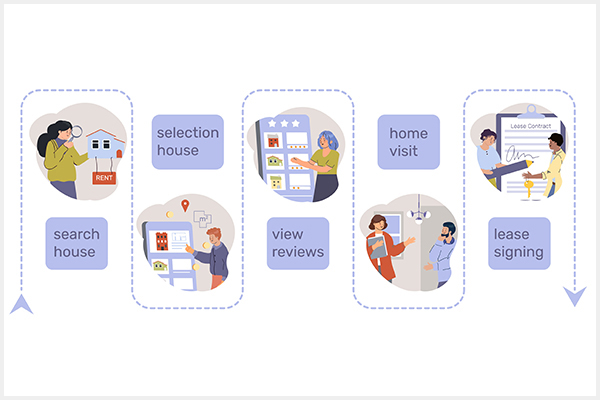
1. Define Your Rental Needs
• Identify preferred location, property type, number of bedrooms, and parking requirements.
• Clarify policies regarding pets.
• Set a realistic monthly budget, factoring in utilities, parking, and tenant insurance.
2. Engage a Licensed Real Estate Agent
• Share your rental criteria and desired move-in date.
• Your agent will source suitable listings and coordinate property viewings
3. View Properties
• Attend in-person or virtual tours.
• Ask detailed questions about utility responsibilities, appliances, lease terms, and neighbourhood.
4. Choose a Property and Submit an Offer
• Your agent will help prepare the Agreement to Lease (OREA Form 400).
• Be prepared to provide a first and last month’s rent deposit.
5. Submit Required Documentation
• Government-issued photo ID
• Proof of income (e.g., pay stubs, employment letter)
• Recent credit report
• Completed rental application form
• References (if requested)
6. Landlord Review and Approval
• Landlord evaluates your application, credit history, employment, and references.
• They may request additional documentation.
7. Sign the Lease Agreement
• Review the lease thoroughly with your agent.
• Confirm lease start/end dates, rent, utilities, inclusions, and special conditions.
8. Pay the Required Deposit
• Transfer first and last month’s rent via certified cheque, bank draft, or e-transfer.
• Funds are held in the brokerage’s trust account.
• Brokerage will provide payment instructions.
9. Set Up Tenant Insurance & Utilities
• Arrange tenant insurance and provide proof before receiving keys.
• Transfer utilities (hydro, gas, water, internet) to your name effective lease start date
10. Move-In Day
• Conduct a move-in inspection (if possible) to document unit condition.
• Collect keys and confirm access to all relevant areas.